Glossary
Quick definitions of key terms
Guides, glossaries and calculators to help you scope, cost and run an ERPNext implementation — from GST and e-invoicing setup to module-by-module walkthroughs.
Quick definitions of key terms

Expert insights and updates
Simple step-by-step resources

Easy explanations through videos.
Complete IRN flow in ERPNext (2026)
ERPNext HRMS for India's Labour Codes
ERPNext for Indian hospitals (NABH, ABDM, DPDP)
DPDP Act 2023 Compliance in ERPNext



Strategic guidance from readiness assessment to migration planning

Yes. ERPNext can be self-hosted on any Linux server you control, whether a cloud VPS on AWS, Azure, or DigitalOcean, or a physical server in your office. The GPL v3 licence places no restriction on where you run it or how many users you add. You need a supported Linux distribution, MariaDB, Redis, Nginx, and… Read More " Can I Self-Host ERPNext on My Own Servers? " »
Read More
Choose ERPNext if you want a fully open-source ERP with no per-user fees, complete accounting and manufacturing out of the box, and strong Indian GST compliance. Choose Odoo if you need its wider app ecosystem, such as eCommerce, website builder, and marketing automation, and you are comfortable with per-user Enterprise licensing. For cost-sensitive Indian SMEs… Read More "ERPNext vs Odoo: Which ERP System Should My Business Choose?" »
Read More
Yes, ERPNext software is genuinely free. It is open source under the GPL v3 licence, with no per-user fees, no per-module fees, and no paid “enterprise edition”. What is not free is everything around the software: hosting, implementation, data migration, customisation, training, and ongoing support. For a typical Indian SME, these account for 100 percent… Read More "Is ERPNext Really Free?" »
Read More
Every quarter, finance teams across mid-market and enterprise organizations quietly absorb a cost that never appears as a line item on the P&L. It is the cost of compensating for a broken ERP. It shows up as reconciliation headcount. As the three-person data team manually extracting reports that the system should produce autonomously. As the… Read More "ERPNext or Headcount: Only One of Them Scales Without Destroying Your EBITDA." »
Read More
The margin compression facing service businesses in 2026 is not a market cycle. It is a structural consequence of fragmented financial architecture. While macroeconomic volatility has forced CFOs to scrutinize every dollar of EBITDA, the deeper crisis is architectural: most service businesses — consulting firms, IT managed service providers, engineering firms, legal practices, marketing agencies… Read More "The Profitability Blind Spot ERPNext Was Built to Eliminate" »
Read More
There is a specific moment when a CFO realises their payroll infrastructure is not a back-office function. It is a balance sheet risk. For Indian enterprises in 2026, that moment has arrived. And it did not arrive quietly. India’s four Labour Codes, the Code on Wages (2019), the Code on Social Security (2020), the Industrial… Read More "Labour Code Implementation in ERPNext (HRMS) – Key Considerations" »
Read More
The boardroom question nobody asks Boards spend hours debating ERP investment decisions. Should we move to S/4HANA? Is Oracle Fusion the right call? What’s the case for Dynamics 365? Cloud or hybrid? Greenfield or brownfield migration? What boards almost never ask is the question that matters more than any of these: How much of the… Read More "The 50% Problem – Why your ERP investment is quietly bleeding value" »
Read More
The ERP world is changing fast. SAP announced end-of-mainstream-maintenance for SAP Business Suite / ECC (core apps) on December 31, 2027 (with some older enhancement-package variants having earlier stop-dates), and vendors, implementers and customers are already scrambling. That deadline is the catalyst many organizations need to stop treating ERP as “set-and-forget” and to pick a… Read More "Beyond SAP ECC: Why ERPNext is the Strategic Choice for 2028" »
Read More
For decades, the manufacturing sector has been told that enterprise-grade excellence requires a choice between two monolithic giants: SAP or Oracle. In 2026, that narrative is being dismantled. As mid-market manufacturers face increasing pressure to modernize their shop floors while maintaining lean operations, the high costs and rigid structures of legacy ERP systems have become… Read More "Why Mid-Market Manufacturers are Moving Beyond the SAP and Oracle Duopoly" »
Read More
The American small-to-medium business (SMB) sector in 2026 faces a unique paradox. While digital transformation is no longer optional, the cost of maintaining the “Big Three” legacy ERP systems has reached an inflection point. For many CFOs, the traditional software-as-a-service model has transformed from an enabler into a growth tax. In a volatile economic environment… Read More "Why US SMBs are Choosing ERPNext to Outscale the Competition" »
Read More
Introduction Goods and Services Tax compliance in India has evolved into a continuous digital reporting framework driven by data analytics, invoice level validation and automated reconciliation. Every sales invoice, purchase invoice, credit note and tax adjustment directly impacts GSTR 1, GSTR 3B, GSTR 2B, input tax credit eligibility and working capital efficiency. For growing businesses,… Read More "GST Compliance in India Using ERPNext 16 " »
Read More
At Finstein, we spend our days working alongside CFOs, Finance Controllers and Managers across manufacturing, fintech and multi-entity enterprises. One truth remains consistent regardless of industry: Finance teams are not looking for more features. They are looking for trustworthy numbers, faster closes, predictable costs and freedom from constant ERP firefighting. This guide is written from… Read More "Why Finance Teams Choose ERPNext Over Legacy Systems" »
Read More
In the early stages of a digital roadmap, the temptation to stick strictly to out of the box features is strong. Leadership often views customization as a phase two priority. They see it as something to be handled once the team settles in. But as we move through 2026, the gap between standard software and… Read More "Is Your Standard ERP Holding You Back?" »
Read More
Look closely at your operational blueprint. Thousands of data points flow across your departments every minute. This digital velocity drives your efficiency, but it also creates a massive, silent vulnerability. When data changes without control, the foundation of your business integrity starts to crack. As we move into 2026, the era of simply trusting system… Read More "Do You Control Your ERP Data Or Just Hope You Do?" »
Read More
Growth is supposed to be a good thing. More customers. More revenue. More people on the team. But for many organizations, growth quietly triggers an unexpected side effect their ERP gets more expensive. Not because they’re doing something wrong. But because their software licensing model is designed that way. Most proprietary ERP systems operate on per-user, per-module,… Read More "Paying Too Much for ERP and Getting Too Little? ERPNext Fixes That." »
Read More
Last year, everyone was excited about AI chatbots.Ask a question → get an answer.Simple, helpful… but limited. But in 2026, something much bigger is taking over the ERP world. AI Agents.Not chatbots — →Not text generators — → Not simple automation. We’re talking about autonomous, decision-making AI workers that can act, plan, learn, and execute business tasks… Read More "How AI Agents Are Automating ERPNext Tasks in 2026?" »
Read More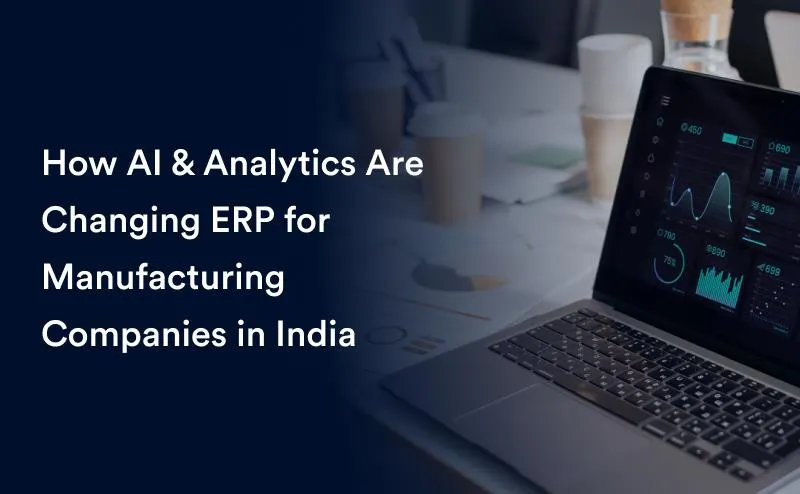
Running a manufacturing business in India isn’t easy. Between production schedules, supplier delays, inventory costs, and GST compliance, business owners often find themselves buried in spreadsheets. That’s where modern ERP systems powered by AI and analytics are transforming how Indian manufacturers work. Among all the ERP options available today, ERP Next stands out for its flexibility, open-source… Read More "How AI & Analytics Are Changing ERP for Manufacturing Companies in India" »
Read More
Running a small business in India is not easy. From managing GST compliance and e-invoicing to tracking inventory, payroll, and customer relationships, owners often juggle multiple tasks simultaneously. That’s where ERP software comes in. Among the best ERP providers in India, solutions like ERP Next have become game-changers for startups and SMEs. Unlike complex systems… Read More "How ERP Benefits Small Businesses in India?" »
Read More
In today’s world, Businesses in Chennai, from manufacturing giants to growing startups, are rapidly embracing ERP software to manage finance, supply chains, sales, HR, and compliance. Choosing the right ERP service provider is crucial because ERP is not just software; it’s a business transformation tool. The choice of ERP service matters as much as the… Read More "Top 5 ERP Service Providers in Chennai" »
Read More
If you’re running a manufacturing company in India, chances are you’ve heard of ERP software but still wonder: Which ERP is best for manufacturing companies in India?From ERP in Chennai to ERP for small businesses in India, the demand for reliable and cost-effective ERP solutions is skyrocketing. As industries shift from outdated systems, such as Tally… Read More "Which ERP is Best for Manufacturing Companies in India?" »
Read More
Are you searching for an agile, cost-effective, and scalable ERP solution that rivals the giants like SAP, NetSuite, Oracle, and Microsoft Dynamics 365? Meet ERPNext — the open-source ERP platform that is redefining how modern businesses run their operations. What is ERPNext? ERPNext is a robust, cloud-native Enterprise Resource Planning (ERP) software that helps businesses… Read More "ERP Next Implementation: A Powerful Alternative to SAP, NetSuite, Oracle, and Dynamics 365" »
Read More
Compliance always comes at a cost — whether you follow the rules properly or ignore them. But in the long run, poor compliance costs even more. In today’s digital world, staying compliant isn’t optional — it’s essential for security and business success. Instead of seeing compliance as a burden, businesses can rethink their approach by… Read More "How Compliance Costs Add Up a Breakdown of Expenses" »
Read More
What Is the Repo Rate? The Repo Rate is the rate at which the Reserve Bank of India (RBI) lends money to commercial banks. It’s a key monetary policy tool used to manage inflation, liquidity, and economic growth. Latest Update — April 2025 The RBI has cut the repo rate to 6.00%, signaling a more accommodative stance to support economic… Read More "What Will the RBI’s Latest Rate Cut Mean for Borrowers and Investors?" »
Read More